Autonomous Kill Chains: The Risk of Unauthenticated AI Agents
Elena Rodriguez
VP of Engineering · June 16, 2026
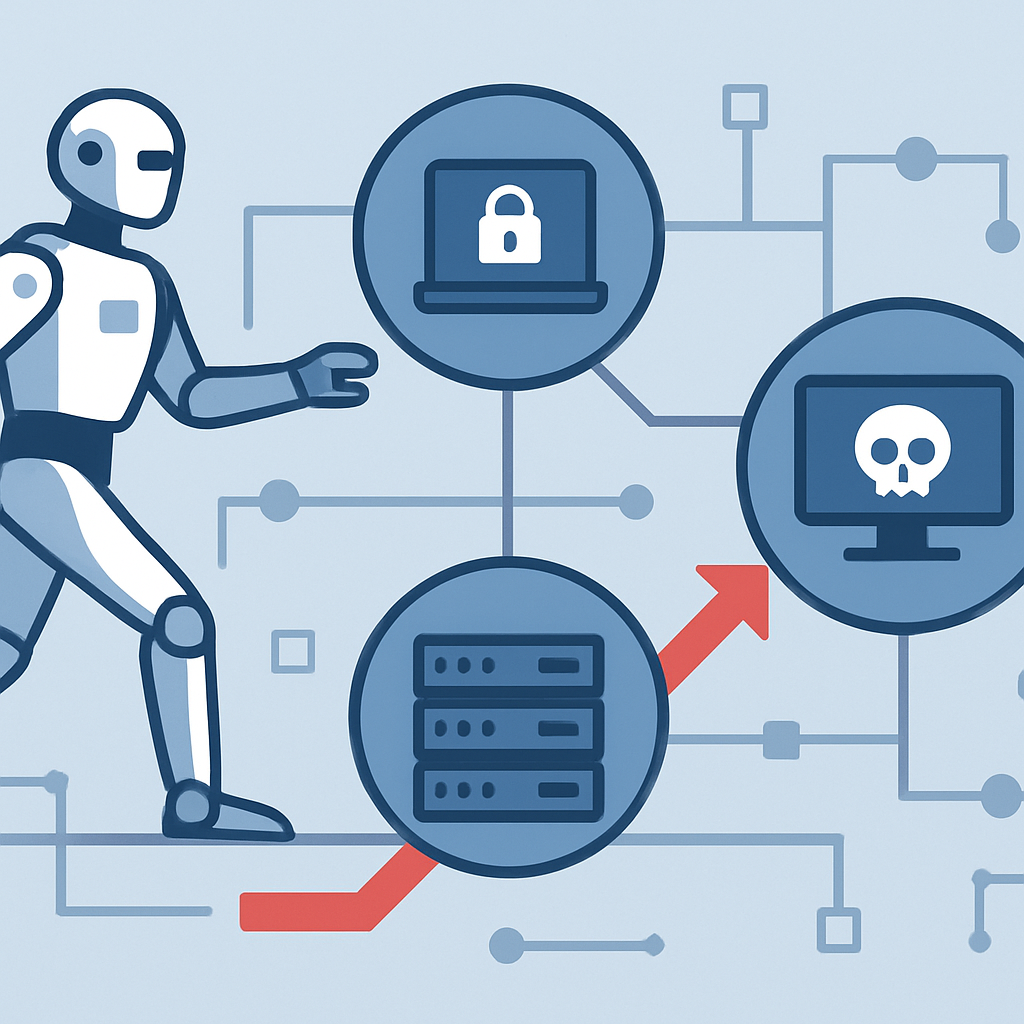
Security teams are tracking a shift from static attack scripts to agentic frameworks that improvise. These AI agents run multi-step kill chains in real time, harvesting credentials and pivoting across networks without human input. The newest concern: unauthenticated agent endpoints that can be coerced into executing unauthorized, multi-step tasks. If your app exposes an agent, that agent is now an attack surface.
Why autonomous agents change the math
A static script does one thing. An agent improvises, adapting its next move to whatever it finds. When an agent endpoint lacks authentication or scoping, an attacker can hand it a goal and let it work out the steps.
Mobile apps increasingly ship agentic features, and an under-secured agent endpoint is an open door to whatever that agent can reach.
What we look for in agentic apps
The failure modes are concrete and recurring when teams wire agents into a client.
- Unauthenticated or weakly scoped agent endpoints
- Over-broad agent permissions that persist beyond a single task
- Missing confirmation gates before an agent takes irreversible actions
- Agent credentials and tool tokens stored insecurely on-device
How RASMISER secures the agent surface
RASMISER flags exposed agent endpoints, insecurely stored agent credentials, and missing authorization on the paths an agent can trigger, each explained in plain English and mapped to OWASP MASVS.
Combined with runtime protection, the agent's endpoints and tokens stay locked down with anti-tampering and TLS pinning, so a coerced agent cannot become a multi-step kill chain inside your app.
The takeaway
Agentic features are powerful and they widen your attack surface. Authenticate every agent endpoint, scope every permission, and scan the agent paths before an attacker turns your assistant into an intruder.
Scan your app free