Data Poisoning: Corrupting AI Before It Ever Ships
Sarah Chen
Head of Security Research · June 17, 2026
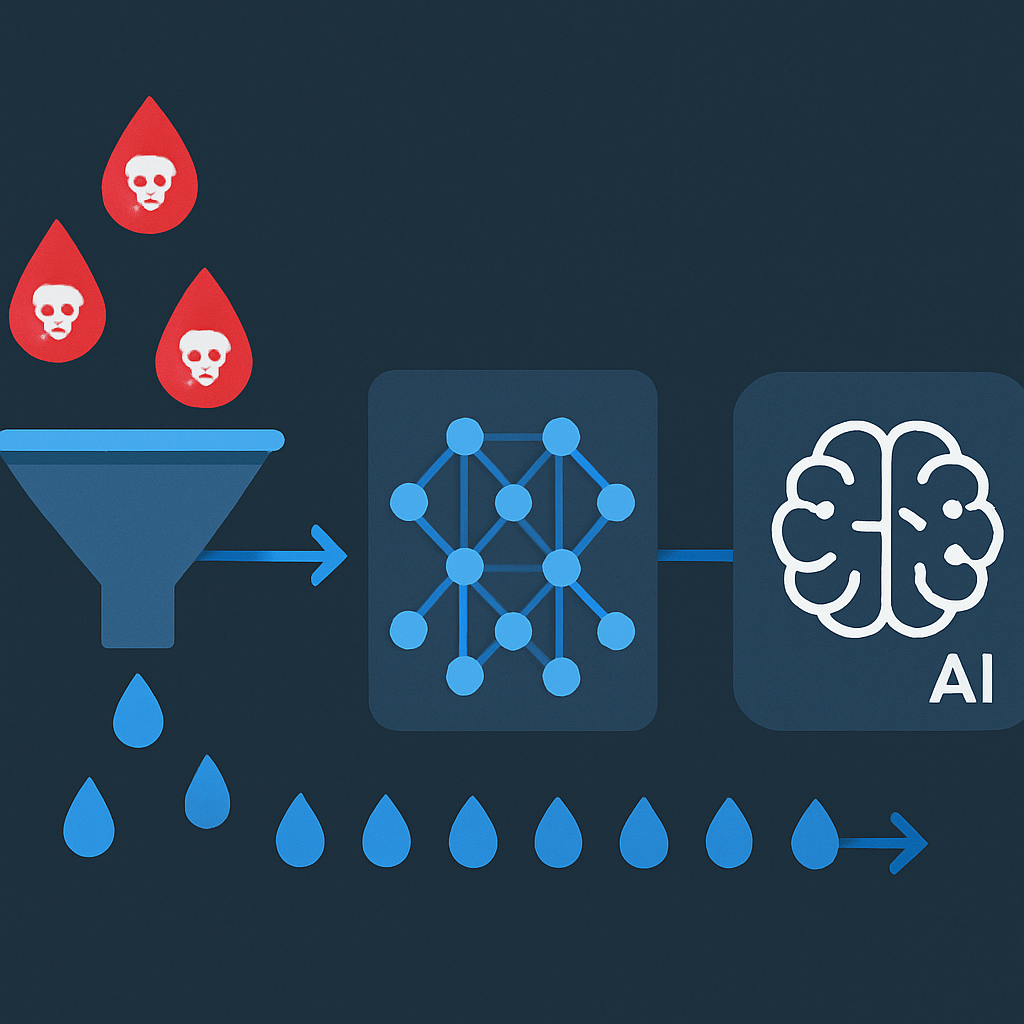
New research keeps lowering the bar for data poisoning: corrupting a surprisingly small slice of a model's training or fine-tuning data can plant a hidden backdoor that behaves normally until a specific trigger appears. As more mobile apps bundle on-device models or fine-tune on user data, the attack moves upstream into your AI supply chain, long before a single line of app code runs.
Why poisoning is a supply-chain problem
A poisoned model is not a code bug you can grep for. The malicious behavior is baked into the weights, dormant until a trigger input activates it, which makes it nearly invisible to traditional testing.
If you pull a pretrained model from a public hub, fine-tune on scraped data, or accept user contributions, you inherit whatever was hidden upstream, and you ship it inside your binary.
Where the risk reaches your app
The exposure concentrates around what you bundle and where your training data comes from.
- Pretrained model files pulled from unverified or unsigned sources
- Fine-tuning on scraped or user-supplied data with no provenance
- Bundled model weights shipped without integrity verification
- No validation of model outputs before the app acts on them
How RASMISER inspects your AI supply chain
RASMISER inventories the model files and AI components compiled into your build, flags unsigned or unverified artifacts, and highlights where model output is trusted without validation, each mapped to OWASP MASVS.
Wired into CI, the scan turns model provenance and integrity into an automatic gate, so an unverified or tampered model file fails the build instead of shipping to users.
The takeaway
Data poisoning attacks your model before your code ever runs, so source-only security misses it entirely. Verify model provenance, check integrity at build time, and validate what the model produces before you trust it.
Scan your app free