Shift Left: Making Security a Build Step, Not a Blocker
Elena Rodriguez
VP of Engineering · June 9, 2026
The slowest way to do security is to leave it until the end. A manual pentest the week before launch finds problems when they are most expensive to fix and most likely to delay a release. Shifting security left, into the build pipeline itself, keeps teams fast and gives clients real confidence in every release.
Why end-of-cycle security fails
When findings arrive days before launch, teams face a bad choice: delay the release or ship with known risks. Neither outcome makes clients happy, and both erode trust over time.
Catching issues at commit time changes the economics entirely. A finding fixed the moment it is introduced costs a fraction of one discovered in a pre-launch audit.
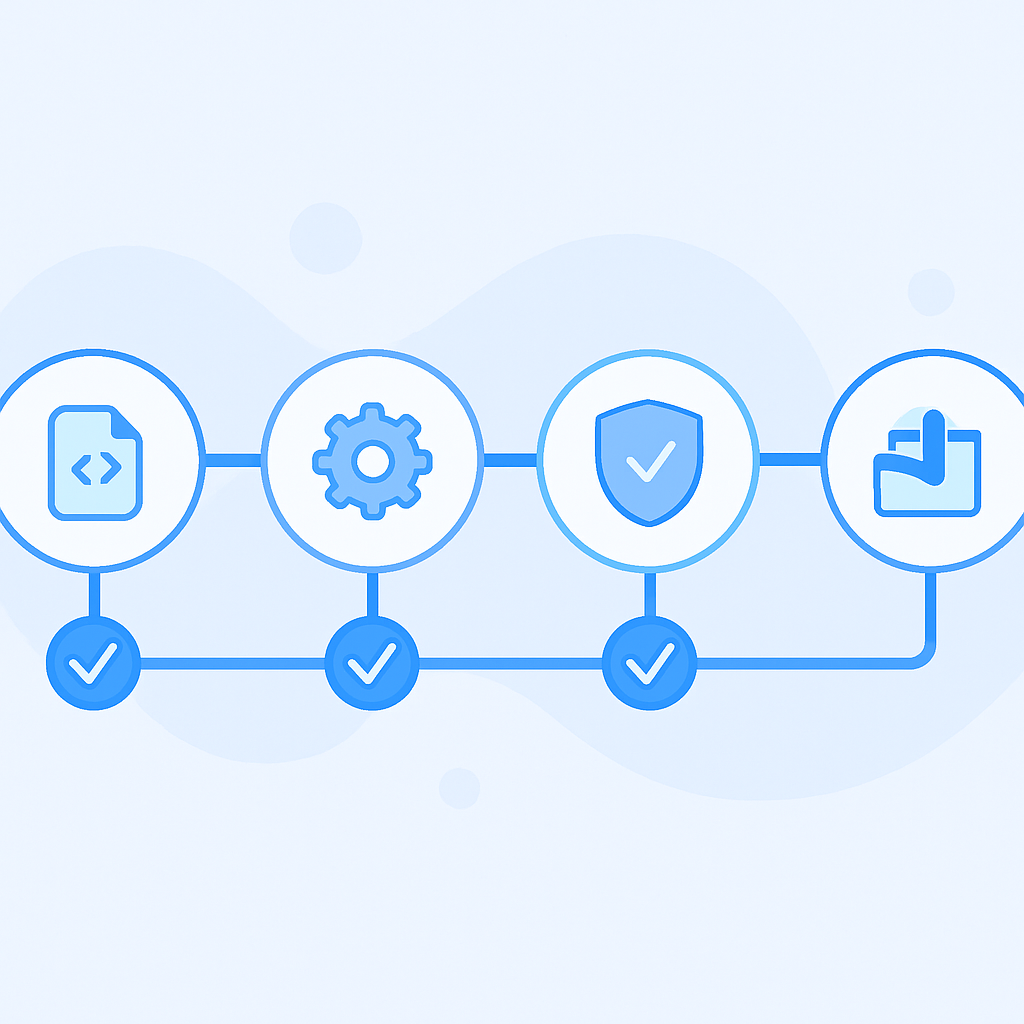
Security as an automated build step
RASMISER plugs into GitHub, GitLab, and Bitbucket pipelines. Every build is scanned automatically, and you set the policy: warn on medium findings, fail the build on critical ones.
- Scans trigger on every pull request and merge
- Critical findings block the release automatically
- Results export as SARIF and JSON for your existing tools
Turning security into a client-facing advantage
When security is continuous, you can show clients exactly where they stand. Every release ships with an OWASP MASVS-aligned report, so compliance becomes a download instead of a scramble, and your team can point to a clean, auditable history.
That visibility is what keeps clients satisfied: they are not asking whether the app is secure, they can see it, release after release.
The takeaway
Security does not have to be the thing that slows a launch down. Built into the pipeline, it becomes invisible to developers and reassuring to clients, a quiet guarantee on every single release.
Scan your app free